Telogen Effluvium
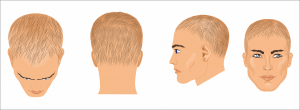
Telogen effluvium is a temporary form of hair loss that causes sudden, even shedding across the whole scalp. It happens when a shock to the body, such as an illness, childbirth or a crash diet, pushes a large share of growing hairs into the resting (telogen) phase at once. Those hairs fall out about two to three months later. Most cases settle on their own within six to nine months.
Telogen effluvium does not cause bald patches, and it does not destroy follicles. The challenge is telling it apart from pattern baldness, which looks similar early on and does not recover without treatment. At Parsa Mohebi Hair Restoration, Dr. Mohebi and his team see many patients who are unsure which one they have. This page covers the symptoms, causes, timeline and treatment so you know what to watch for.
Telogen Effluvium Symptoms
At any given time, about 85 to 90 percent of scalp hairs are growing and the rest are resting. Losing up to 100 hairs a day is normal daily shedding. Telogen effluvium hair loss pushes far more hairs into the resting phase, and the shedding becomes hard to miss.
Common signs of Telogen Effluvium include:
- Sudden increase in shedding: More hair in the shower drain, on the pillow and in your brush, often in handfuls.
- Even thinning: The whole scalp looks less dense, including the sides and back. The part may look wider.
- A white bulb at the root: Shed telogen hairs have a small, white, club-shaped bulb at the end. This is a normal resting hair, and it means the follicle is still alive.
- No bald patches: Telogen effluvium thins hair without leaving smooth, bare spots. Round bald patches point to alopecia areata instead.
- A delayed start: Shedding begins weeks to months after the event that caused it, so many people do not connect the two.
What Causes Telogen Effluvium?
Almost any major physical or emotional shock can trigger telogen effluvium. The most common causes are:
- High fever or serious illness: Flu, pneumonia and COVID-19 are frequent triggers. Read more about COVID-19 and hair loss.
- Surgery or injury: Major operations and accidents can set off shedding. Temporary shedding after a hair transplant works the same way and is covered in shock loss after hair transplant.
- Childbirth: Hormone levels drop after delivery, which triggers postpartum shedding.
- Crash diets and nutritional gaps: Rapid weight loss, low protein intake and iron deficiency are well-known causes.
- Thyroid problems: Both an underactive and an overactive thyroid can trigger shedding.
- Severe emotional stress: A death in the family, a divorce or a period of intense pressure can all play a role. Dr. Mohebi explains the connection in his video on stress and hair loss.
- Medications: Starting, stopping or changing certain drugs can trigger it. Our guide to medications that cause hair loss lists the common ones.
- Stopping birth control: Coming off hormonal birth control can cause a shedding episode a few months later.
How Long Does Telogen Effluvium Last?
Acute telogen effluvium usually lasts less than six months. Shedding that continues past six months is considered chronic telogen effluvium, which is covered below.
Telogen Effluvium Timeline
- The trigger: An illness, surgery, delivery or other shock pushes many hairs into the resting phase.
- Two to three months later: Shedding begins. In some people it takes up to four months.
- The peak: Shedding is heaviest for several weeks, then gradually slows.
- Around six months: In most cases, shedding has returned to normal. Some take up to nine months.
- Six to 18 months: New hair fills in. Scalp hair grows about half an inch a month, so full density can take a year or more to return.
Telogen Effluvium Recovery Signs
- Less hair in the shower and brush than at the peak
- Short, fine new hairs along the hairline and part
- A return to the same number of shed hairs you saw before the episode
- More density at the roots, even before the length catches up
Telogen Effluvium Treatment
Telogen effluvium usually corrects itself once the trigger is gone. Treatment focuses on removing the cause and supporting regrowth.
- Find and remove the trigger. Look back two to four months for an illness, a new medication, a diet change or another major event.
- Get blood work. A physician can check iron stores, thyroid function, vitamin B12 and folate. Correcting a deficiency often stops the shedding.
- Handle your hair gently. Avoid aggressive brushing, tight styles and harsh treatments while the scalp recovers.
- Eat enough protein. Hair is made of protein, and low intake slows regrowth.
- Consider topical treatment. Minoxidil and PRP therapy may support regrowth in some patients. Minoxidil can cause a short burst of extra shedding when you start it.
- Give it time. Visible regrowth usually takes three to six months after the shedding stops.
There is no single cure for telogen effluvium, and supplements will not stop it unless you have a deficiency. Shedding that does not improve after six months deserves a closer look.
Telogen Effluvium in Men and Women
Acute telogen effluvium affects both men and women. The way it shows up, and what it gets mistaken for, often differs.
Telogen Effluvium in Men
Most men assume any thinning is the start of balding, so telogen effluvium in men is often mistaken for male pattern baldness. The clearest clue is location. Telogen effluvium thins the sides and back of the scalp along with the top. Male pattern baldness spares the sides and back, which is why that area serves as the donor zone in a hair transplant. A hair transplant does not treat telogen effluvium. Surgery is usually postponed until shedding settles and the donor area recovers.
Telogen Effluvium in Women
Women face a few triggers that men do not. Postpartum shedding usually peaks a few months after delivery, and Dr. Mohebi discusses it in pregnancy and hair loss. Stopping birth control can trigger an episode as well. Women are also far more likely to develop chronic telogen effluvium. Learn more about hair loss in women and its causes.
Is It Telogen Effluvium or Male Pattern Baldness?
The two can overlap. Telogen effluvium can also unmask pattern hair loss that was already developing, which makes the thinning look worse than either condition alone. The table shows the main differences.
- Onset: Telogen effluvium starts suddenly, two to three months after a trigger. Male pattern baldness develops gradually over years.
- Where it thins: Telogen effluvium thins the whole scalp, including the sides and back. Male pattern baldness affects the hairline, temples and crown.
- Shed hairs: Telogen effluvium sheds full-thickness hairs with a white bulb. In male pattern baldness, hairs get finer and shorter over time before they stop growing.
- Outlook: Telogen effluvium usually recovers on its own. Male pattern baldness keeps progressing without treatment.
- Hair transplant: A transplant does not treat telogen effluvium. For stable male pattern baldness, it can restore density.
Telogen effluvium is also sometimes confused with diffuse alopecia areata, which needs different treatment. A miniaturization study can show whether follicles are shrinking, which separates pattern hair loss from shedding.
What Is Chronic Telogen Effluvium?
Chronic telogen effluvium is shedding that lasts longer than six months, often with no clear trigger. It mostly affects otherwise healthy women between 30 and 60, frequently those who had very thick hair earlier in life. Shedding can come and go for years. Because the hair started out dense, the thinning may be obvious to the patient long before anyone else notices. Chronic telogen effluvium does not lead to baldness, but repeated episodes can sometimes reveal female pattern hair loss. Anyone with shedding past six months should have an evaluation to rule out other causes.
How Is Telogen Effluvium Diagnosed?
Diagnosis starts with a detailed history. A specialist will ask about illnesses, surgeries, medications, diet and stress in the months before the shedding began.
- Hair pull test: The doctor gently pulls a small group of hairs. Several hairs coming out with white bulbs suggests active telogen shedding.
- Scalp exam and trichoscopy: Magnification shows whether hairs are uniform in thickness or miniaturizing.
- Blood work: Tests for iron, thyroid function and other deficiencies help find the cause.
- Scalp biopsy: Rarely needed, but useful when the diagnosis is unclear.
When to See a Hair Loss Specialist
Book an evaluation if shedding lasts longer than six months, if you notice patches or a receding hairline, or if your hair has not filled back in after a known trigger has passed. These signs can mean chronic telogen effluvium or a second condition such as pattern hair loss.
A hair loss evaluation at Parsa Mohebi Hair Restoration includes a microscopic miniaturization study and a full medical history. If the result points to pattern hair loss, the team can discuss medical treatment and whether you are a hair transplant candidate.
Dr. Mohebi and his team see patients in Beverly Hills, Los Angeles, San Francisco and San Diego. Schedule a consultation with a hair loss specialist to find out what is behind your shedding.