What Medications Cause Hair Loss?
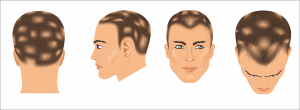
The medications most often linked to hair loss include steroids and testosterone, blood pressure drugs, blood thinners, gout and cholesterol medications, thyroid hormone, mood stabilizers, acne retinoids and chemotherapy. Doctors call this drug-induced hair loss, or drug-induced alopecia. It usually appears as diffuse shedding a few months after a person starts a new drug, changes a dose or stops one. In most cases it is temporary and settles once the medication issue is resolved.
For most drugs, hair loss is an uncommon side effect. Many people take several prescriptions at once, so it is easy to find hair loss on one label and blame that drug. At Parsa Mohebi Hair Restoration, Dr. Mohebi and his team confirm the cause before recommending any change. Sometimes the medication is responsible. In other cases it has uncovered genetic hair loss or a separate condition that needs its own treatment.
Medications That Cause Hair Loss
The drug classes below are the ones most often linked to hair loss. Most people who take these medications keep their hair, and a listed side effect does not mean shedding is likely. Newer weight loss drugs such as semaglutide (Ozempic) are also tied to shedding, mostly through rapid weight loss. Our guide to weight loss and hair loss explains why fast weight loss triggers shedding.
Steroids and Testosterone
Steroids fall into two groups, and each affects hair differently.
Corticosteroids such as prednisone and cortisone reduce inflammation. Long-term use can contribute to hair loss. Patients who rely on them for asthma, autoimmune disease or another condition should weigh that risk with their physician before making any change. The picture is different with corticosteroid injections, which are a standard treatment for alopecia areata. The effect depends on the drug, the dose and the reason it is prescribed.
Anabolic steroids act like testosterone. Many belong to the testosterone family, and some convert to dihydrotestosterone (DHT). DHT is the hormone that shrinks genetically sensitive follicles, so bodybuilders who use these drugs often notice thinning at the hairline and crown.
Does TRT cause hair loss?
It can, in men who are genetically prone to it. Some men in their 40s and 50s start losing hair only after they begin testosterone replacement therapy (TRT). Dr. Mohebi calls this catch-up hair loss. Low testosterone had been holding back the male pattern hair loss their genes already carried, and restoring normal levels lets it appear. These men may not need to stop TRT. Finasteride lowers DHT while testosterone stays in its normal range, and its possible side effects are worth reviewing with a physician.
Blood Pressure Medications
Beta blockers and ACE inhibitors are the blood pressure drugs most often linked to hair loss. Metoprolol and propranolol are common beta blockers. Lisinopril and enalapril are common ACE inhibitors. Clonidine has also been associated with shedding in case reports. When hair loss follows one of these drugs, it is usually telogen effluvium. Blood pressure can be managed with many different drug classes, so a prescriber can often switch to another option if shedding continues.
Gout Medications
Allopurinol lowers uric acid to prevent gout attacks. Hair loss is a rare reported side effect, and it usually appears as diffuse shedding. Colchicine, another gout drug, can cause rapid hair loss at high or toxic doses. There is little clinical evidence that high uric acid causes hair loss on its own. Shedding that begins after allopurinol is worth raising with the prescribing doctor.
Blood Thinners
Heparin and warfarin (Coumadin) are well-documented causes of drug-induced hair loss. Heparin-related shedding usually reverses after the drug is stopped. Newer anticoagulants such as rivaroxaban, apixaban and dabigatran have also been reported, though less often.
Cholesterol Medications
Fibrates such as gemfibrozil and fenofibrate have been linked to thinning and to dry, brittle hair. Statins are reported less often. Clofibrate still appears on many hair loss lists, but it was discontinued in 2002.
Thyroid Medications
Levothyroxine replaces thyroid hormone. Its prescribing information notes that partial hair loss can occur during the first few months of treatment and is usually temporary. Antithyroid drugs used for an overactive thyroid can also trigger shedding. Untreated thyroid disease causes hair loss too, which makes it hard to separate the condition from the medication. Dr. Mohebi explains that overlap in his video on thyroid disease and hair loss.
Antidepressants and Mood Stabilizers
Mood stabilizers carry the clearest link. Hair loss is reported in 12 to 28 percent of people taking valproic acid (Depakote), and higher doses carry more risk. Lithium is linked to hair loss in 12 to 19 percent of patients. Antidepressants, including SSRIs such as sertraline and fluoxetine, are reported less often. Anyone taking these medications should talk with their psychiatrist before changing anything.
Acne Medications
Isotretinoin (Accutane) is a vitamin A derivative. It can cause temporary thinning during treatment, especially at higher doses. Acitretin, a related retinoid used for psoriasis, causes hair loss more often.
Chemotherapy and Methotrexate
Chemotherapy is the main cause of anagen effluvium. Many chemotherapy drugs target rapidly dividing cells, and hair follicle cells are among the fastest-dividing cells in the body. Loss usually begins two to five weeks into treatment and can include the eyebrows and eyelashes. Hair typically returns after treatment ends, sometimes with a different texture or color.
Methotrexate is also prescribed at much lower doses for rheumatoid arthritis and psoriasis. At those doses it tends to cause gradual thinning.
Hair Loss Medications
Some hair loss treatments cause temporary shedding at the start. Minoxidil is the best-known example. In the first weeks of use, it pushes resting hairs out so new growth can take their place. This shedding phase is expected and usually stops on its own. Our guide to minoxidil (Rogaine) explains what to expect and how long it lasts.
Vitamins and Supplements
Dr. Mohebi’s view on hair vitamins is direct. Most people in North America who eat a balanced diet do not need them. Biotin and zinc products are sold widely for hair and nails, but they rarely help people without a deficiency. Many of his patients stop taking them with no change in their hair. Too much of certain vitamins can cause problems. High vitamin A intake, often from stacking several supplements, is a known cause of shedding. Read more in hair vitamins: fact or myth. Gym supplements raise similar questions, which we cover in does creatine cause hair loss.
What Medications Cause Hair Loss in Females?
Women share most of the risks above. A few medications affect them in particular.
- Birth control pills: Pills with more androgenic progestins, such as levonorgestrel, can thin hair in women with a genetic tendency toward female pattern hair loss. Starting, switching or stopping the pill can also trigger telogen effluvium.
- Hormone therapy: Hormone replacement therapy and testosterone prescribed for low libido can both contribute to thinning.
- Thyroid medication: Dose changes during pregnancy or after delivery can coincide with shedding. Our article on pregnancy, thyroid problems and hair loss explains how these overlap.
- Mood stabilizers: Valproic acid and lithium carry the same risks for women as for men.
Timing helps separate the causes. Shedding that starts two to four months after a medication change points toward the drug. A part that widens slowly over years points toward genetic thinning. Learn more about hair loss in women and how it is treated.
Is Your Medication Really Causing Your Hair Loss?
People on long-term medications often look up the side effects and find hair loss listed. For most drugs it is a remote possibility. When several prescriptions are involved, the odds of blaming the wrong one go up. Illness, surgery, crash diets, thyroid disease, stress and genetic hair loss can all look like medication-related shedding.
Dr. Mohebi recommends an evaluation before any change. A specialist can examine the scalp under magnification, measure miniaturization, review the timeline and look for other causes. If a medication is responsible, your prescribing physician may be able to adjust the dose or replace it. If it is not, you avoid giving up a drug you need with no benefit to your hair.
How Does Medication Cause Hair Loss?
Medications disrupt the hair growth cycle in two main ways. The timing of the shedding usually shows which one is happening.
Telogen Effluvium
Most drug-related hair loss is telogen effluvium. The drug pushes a large share of growing hairs into the resting phase at the same time. Those hairs fall out two to four months later, so shedding often starts long after the new prescription. The loss is diffuse and thins the whole scalp evenly.
Anagen Effluvium
Anagen effluvium happens when a drug interrupts hairs while they are still growing. Chemotherapy causes most cases. Loss begins within days to weeks and can be extensive.
How Long Does Medication Hair Loss Last?
Shedding from telogen effluvium usually continues for a few months after the trigger is removed. It typically settles within six months. Visible regrowth tends to appear within three to six months. Full density can take 12 to 18 months to return, because scalp hair grows only about half an inch per month. Shedding that lasts longer than six months deserves a closer look for another cause.
Will Hair Grow Back After Stopping a Medication?
In most cases, yes. Drug-induced hair loss is usually reversible, and many patients need no treatment beyond resolving the medication issue.
Two situations change the outlook. The first is when shedding has exposed genetic hair loss, as in the TRT example above. Hair lost to the genetic pattern will not return on its own. The second is permanent alopecia after certain chemotherapy regimens, which is uncommon. In both cases, medical hair loss treatment can help preserve what remains. For stable genetic loss, a hair transplant can restore density.
How to Stop Hair Loss From Medication
- Keep taking your medication. Stopping a long-term drug on your own can put your health at risk.
- Talk to your prescribing physician. Ask whether the dose can be adjusted or whether a drug from another class would work.
- Write down the timeline. Note when you started, changed or stopped each medication and when the shedding began.
- Get a hair loss evaluation. A specialist can confirm whether the drug is the cause or whether another condition is involved.
- Support regrowth if needed. Treatments such as minoxidil and PRP therapy may help while the follicles return to their normal cycle.
- Give it time. Visible regrowth usually takes three to six months.
When to See a Hair Loss Specialist
Book an evaluation if shedding lasts longer than six months, if you notice patches or a receding hairline, or if you are unsure which medication is responsible. A hair loss evaluation at Parsa Mohebi Hair Restoration includes a microscopic miniaturization study and a full review of your medical history and medications. That combination shows whether a drug, a medical condition or genetic hair loss is behind the shedding.
Dr. Mohebi and his team see patients in Beverly Hills, Los Angeles, San Francisco and San Diego. Schedule a consultation with hair loss specialist Dr. Mohebi to find out whether your medication is the cause.