Beard Hair Transplant
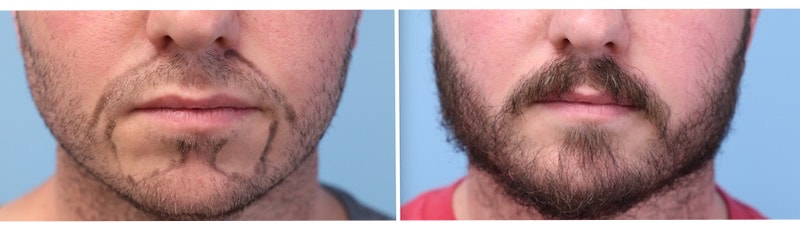
Many men find it difficult to grow a beard, or their beards may grow unevenly with patchy areas. These patients can easily restore their beards through a beard transplant. The team at Parsa Moehbi Hair Restoration can help restore your hair and confidence.
Take the first step towards your hair transformation.
Fill in the form to begin your life-changing hair restoration journey today!
What Is a Beard Hair Transplant?
A beard hair transplant is a cosmetic procedure that creates a fuller, thicker beard. The procedure involves transplanting a hair follicle, usually from the scalp, to the beard area.
This cosmetic procedure can help you improve the appearance of your beard, mustache, or goatee. A beard hair transplant can fill in patchy areas or make scars less noticeable. A beard hair transplant may also be an important part of gender-affirming care.
A beard to hair transplant moves hair follicles from the beard to the scalp. This procedure is for men who are experiencing male pattern baldness, but have enough donor hair in their beards.
Who Is a Good Candidate for Beard Hair Transplant?
The ideal candidate for a beard hair transplant is a healthy adult. Many who seek beard hair transplants are between the ages of 25 and 50.
The ideal candidate should have:
- Patchy or uneven beard growth
- Scars preventing normal hair growth
- Desire for a fuller beard
- Good donor hair availability, usually from the back of the scalp
Certain health conditions can slow healing or affect results. These conditions include uncontrolled diabetes, bleeding disorders, severe cardiovascular disease, and certain autoimmune diseases.
Your beard hair transplant professional can help you determine if you are a good candidate for beard hair transplant during a consultation screening.
How a Beard Hair Transplant Works
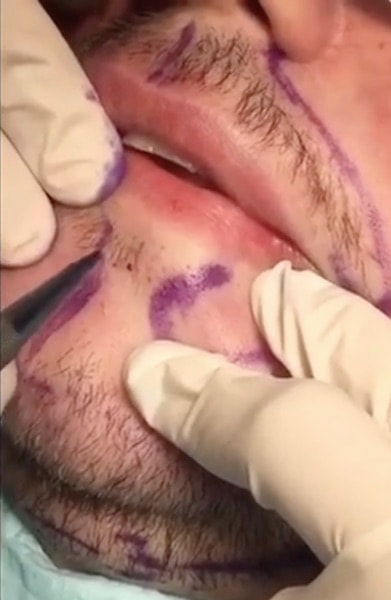
Simply put, a beard hair transplant works by moving healthy hair follicles from the donor area to the recipient site. Of course, the entire process is more complicated. Here’s what you can expect during a beard hair transplant or a hair transplant from beard hair.
Initial Consultation and Planning
During the consultation, you’ll learn what to expect during a beard hair transplant. You’ll also be given information on the recovery phase and ways to ensure a great outcome.
Your hair transplant surgeon will perform an assessment to ensure that the donor hair matches the beard’s hair in coarseness, curl, and color as closely as possible. They will also design the transplant, which involves planning the placement, angle, and technique used in placing each hair follicle.
The initial consultation and planning phase will also include determining the donor area. This step ensures that the transplanted follicles produce hair that closely matches your beard.
Harvesting Donor Hair
Hair transplant surgeons refer to the procedure of harvesting donor hair as Follicular Unit Extraction (FUE). This minimally invasive procedure involves removing the follicles from the donor area, using tiny, precise tools to avoid disrupting the surrounding tissue.
Recipient Site Creation
Your hair transplant surgeon will carefully place each follicle, or graft. This strategic placement allows for natural-looking direction and density, so that your beard hair complements your age, sex, ethnic background and facial features.
Transplantation and Recovery
During the first few days after your beard hair transplant, you may experience redness in the recipient area. You may also feel some tightness and pain in the donor area. These symptoms typically resolve on their own, but pain relievers can help ease your discomfort.
You’ll need to wash your hair carefully for the first five days, but you can resume your normal hair washing routine after that.
Your hair transplant surgeon will likely schedule you for a return appointment about 10 days after the procedure to have any sutures or staples removed. While you may experience “shock loss” around this time, your hair will start to grow back a few months after your transplant.
Beard Hair Transplant Results
You’ll notice some initial growth around 3 to 4 months after your beard hair transplant. Your beard hair will grow longer and thicker after 4 to six months. The implanted hairs will be completely grown about 8 months after the procedure. You’ll enjoy the full results in 9 to 12 months.
Your results will depend on a number of factors, though, such as the type and thickness of your hair and how well your body heals. Wavy or curly hair will produce more bulk and appear thicker after transplantation than straight hair, for example, and beard growth treatments in people with thicker hair shafts usually produce more hair than for those with thinner hair. Your hair transplant surgeon can help shape your expectations during your initial consultation.
Why Choose Parsa Mohebi for Your Beard Hair Transplant
When it comes to beard hair transplants, your surgeon’s experience and credentials matter. Training gives your surgeon expertise in performing advanced procedures safely and effectively, and experience allows your surgeon to provide the best possible results for every patient.
The team of surgeons at Parsa Mohebi are internationally recognized hair transplant surgeons. Dr. Parsa Mohebi has invented several tools that optimize the safety, quality and efficiency of hair transplant procedures. The other hair transplant surgeons on staff at Parsa Mohebi bring their own specialized facial hair expertise to the table.
The restoration surgeons at Parsa Mohebi also provide personalized surgical planning for each patient they see, as every patient has different needs when it comes to their beards. We also provide tailored shaping so that our patients get the beard style they desire. Our patients can also look forward to a natural growth pattern and permanent results, with minimal downtime.We pride ourselves on our high patient satisfaction rates, and the improved confidence and aesthetics our patients enjoy.
Preparing for Your Beard Hair Transplant
Knowing how to prepare for a beard hair transplant or hair transplant from beard hair can greatly improve your overall results.
Preparing for beard hair transplant is similar to preparing for other minimally invasive procedures. You may need to stop taking certain medications, such as anti-inflammatories or over-the-counter medications, as far as two weeks prior to your procedure. Avoid eating or drinking anything other than water or clear liquids after midnight on the day of your appointment. After consulting with our surgical staff regarding medications, take all approved medications as needed with a sip of water.
Other guidelines include:
- No alcohol on the day before or day of your procedure
- Avoid smoking the day before and the remainder of the day following your appointment
- Dress comfortably for your procedure; wear a shirt that unbuttons in the front
- Shave the donor beard with a razor two days before your procedure then do not trim or shave it until after your procedure
- Prior to the day of your appointment, arrange for a ride home after your procedure
- Plan for your procedure to take several hours
Aftercare and Healing
When it comes to getting your desired results, what you do after your procedure is just as important as what you do before it. Here are a few recovery tips to help you get the most out of your beard growth treatment or hair transplant:
- Leave any dressing in place; our hair transplant surgeons will remove it when it is time
- Sleep in an upright position by sleeping in a recliner or using several pillows
- Use steroids and pain medications and as prescribed to ease swelling and discomfort
- If you have had a beard transplant, keep your face dry for 3 to 5 days and avoid touching or shaving the treatment areas for 10 to 14 days or more
- Use saline sprays to keep grafts moist
- Do not wash your hair the day after your hair transplant from beard; on that day, we will instruct you on the washing techniques you’ll use for the first five days after your hair transplant
- For beard transplants, avoid direct sun exposure for the first 10 to 14 days, and then protect the area with hats, staying in the shade, applying SPF 30+, and avoiding peak sun hours
- Follow up with your surgeon as directed, usually within two weeks
Beard Hair Transplant FAQ
The hair transplant surgeons at Parsa Mohebi are always glad to answer questions. Here are some of our most commonly asked questions and their answers.
Is a Beard Hair Transplant Painful?
Because we administer local anesthesia to the treatment area before we begin a beard hair transplant, our patients experience mild, manageable discomfort during the procedure. Slight soreness may occur for the first few days.
How Long Does the Procedure Take?
A beard hair transplant takes 5 to 10 hours, while a beard to scalp transplant may take 3 to 8 hours.
Does the Texture of Hair Change?
Your hair will appear fuller, but the texture of the transplanted hair does not change.
Will Scars Be Visible?
FUE produces tiny, dotted scars that are nearly invisible.
Can Existing Facial Hair be Shaved?
You’ll need to hold off on shaving existing facial hair for two days before your beard hair transplant.
When Can I Shave and Style My New Beard?
Do not style or shave your new beard for 10 to 14 days. Avoid using heat products for two weeks, and use balms and oils after 2 to 3 weeks. You can resume your full styling after 3 to 6 months.
Ready for a Fuller, Natural Beard?
If you are ready for a fuller, more natural-looking beard, meet with Dr. Mohebi’s team in Beverly Hills, Los Angeles, or San Francisco. Dr. Mohebi is a widely respected leader in the hair transplant field because he combines state-of-the-art hair transplant technology with superior technique and artistic sensibility.Every member of our staff takes a patient-first approach to care, which means you are our top priority. We are glad to guide you through each step of your beard hair transplant journey. Reach out to the hair transplant team at Parsa Mohebi today, and get your beard – and your smile – back!